
Last updated: September 27, 2026
Most homeowners replace a heating or cooling system once every 15 to 20 years, so few people have done it recently enough to know the process. This guide walks through the whole decision: how to tell when an upgrade makes sense, which system fits your home, how to compare quotes fairly, and what to expect on installation day.
Short answer: Upgrade when your system is near the end of its life and needs a major repair, uses R-22 refrigerant, or can't keep your home comfortable. For most Vancouver homes a heat pump or dual-fuel system is the strongest option, sized by a load calculation and compared across quotes on equipment, scope and warranty, not price alone.
Signs it's time for an HVAC system upgrade
One sign alone rarely means replacement. Several together usually do.
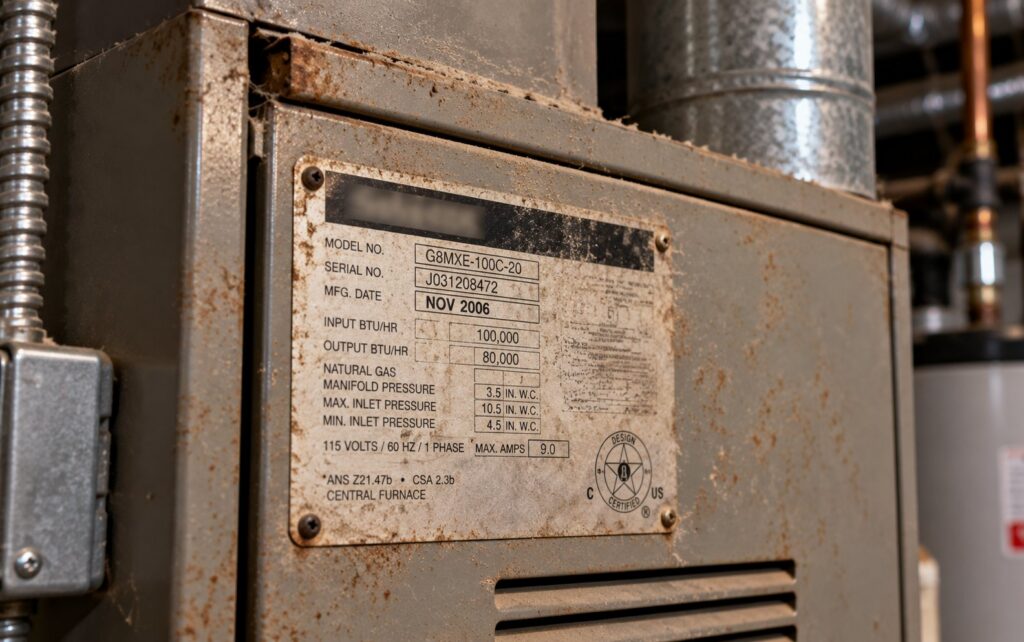
- Age. Furnaces commonly last 15–20 years, and heat pumps and air conditioners around 15. A system in that range that needs a major repair is a strong replacement candidate.
- Frequent repairs. A service call every season, or a single repair costing a large share of a new system, points toward replacement.
- R-22 refrigerant. Systems from before about 2010 often use R-22, which is no longer produced. Refrigerant repairs on these systems are expensive and getting harder.
- Rising bills. Energy use creeping up without changes in weather or habits often means declining efficiency.
- Comfort problems. Rooms that never get warm or cool, uneven temperatures, or humidity that's always too high or too low.
- Noise. Banging, grinding, rattling or a loud outdoor unit.
- You want to add air conditioning. If your furnace is aging too, replacing both with a heat pump often makes more sense than adding an AC to old equipment.
- A remodel or addition that changes your home's heating and cooling needs.
For warning signs that call for a repair visit first, see Common HVAC Problems and When to Call a Professional.
How to upgrade your HVAC system: choosing the right equipment
Heat pump. It heats and cools with one system, and it's efficient in Vancouver's mild winters. It's often the best choice for homes heated with electric resistance today, and a strong option for most others.
High-efficiency gas furnace. A good choice for homes with gas that don't want or need cooling, or that already have a newer AC.
Dual fuel. A heat pump paired with a gas furnace. The heat pump handles most of the season, and the furnace covers hard freezes.
Ductless mini-split. No ductwork needed. It's ideal for additions, converted garages, older homes without ducts, or a problem room.
For a side-by-side comparison with local operating costs, see Heat Pump vs. Furnace in Vancouver WA.
Efficiency ratings. Look at SEER2 for cooling, HSPF2 for heat pump heating, and AFUE for furnaces. Our HVAC terms glossary explains each. In our climate, heating efficiency usually matters more than top-tier cooling efficiency.
Variable-speed equipment costs more upfront, but it delivers steadier temperatures, quieter operation and better humidity control. It's often worth it in homes where comfort has been a struggle.
Before you buy: what a good contractor checks
A proper recommendation starts with your house, not the size of your old unit. Expect a contractor to:
- Calculate your home's load. A Manual J load calculation accounts for square footage, insulation, windows, air leakage and orientation. Replacing "same size as before" often repeats an old sizing mistake. See why sizing and installation matter.
- Inspect the ductwork. Leaky, undersized or damaged ducts can undercut even the best new equipment.
- Check electrical capacity. Heat pumps and some high-efficiency equipment may need a dedicated 240V circuit, and occasionally a panel upgrade.
- Look at venting and gas lines. High-efficiency furnaces vent through PVC and need a condensate drain. Older chimney-vented setups may need changes.
- Account for permits. Replacing heating and cooling equipment generally requires a mechanical permit. A licensed contractor pulls it and schedules the inspection.
How to compare HVAC quotes
Quotes that look different are often just scoped differently. To compare fairly, check each one for:
- Exact equipment: brand and model numbers for every component, indoor and outdoor
- Efficiency ratings: SEER2, HSPF2 or AFUE for the specific matched system
- Sizing: whether it's based on a load calculation
- What's included: permit, thermostat, line set, pad or stand, electrical work, ductwork changes, removal and disposal of old equipment, startup and testing
- Warranty: parts, labor, and who handles registration
- Timeline and payment terms

The lowest price isn't necessarily the lowest cost if it leaves out items another quote includes, or skips the load calculation.
Timing, financing and incentives
Timing. Spring and early fall are the easiest times to schedule a planned replacement. Waiting until a system fails in a January freeze or a July heat wave means making a rushed decision during the busiest season.
Financing. Tri-Tech Heating, Inc. offers financing through Synchrony for qualified buyers.
Incentives.
- The federal 25C tax credit expired December 31, 2025, and doesn't apply to systems installed after that date. See the IRS Energy Efficient Home Improvement Credit page.
- Clark Public Utilities offers rebates and low-interest loans for qualifying upgrades, with eligibility based on factors like your current heating type.
- Check current offers with Clark Public Utilities' energy counselors at (360) 992-3355, or ask us when we quote.
Are you in need of professional services for your home’s heating systems?
Contact Tri-Tech Heating, Inc. for expert solutions today!
Preparing your home for installation day
A little preparation keeps installation day smooth:
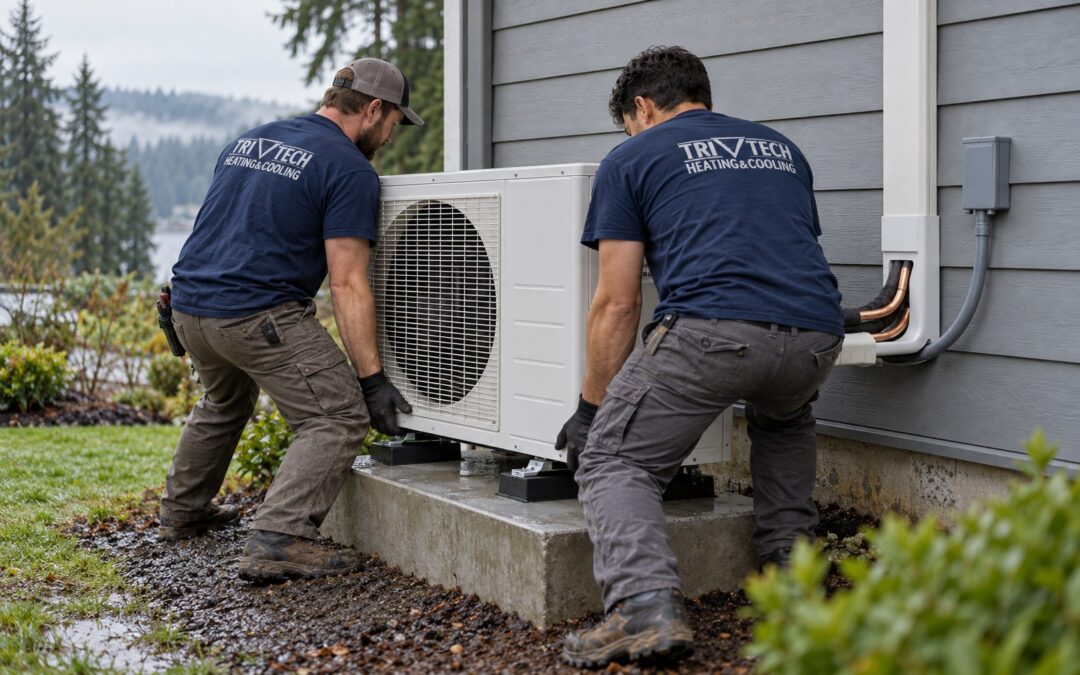
- Clear a path from the door to the furnace or air handler, and from the driveway to the outdoor unit location.
- Clear space around the equipment: at least a few feet around the indoor unit, plus attic or crawlspace access if ductwork is involved.
- Plan for pets and kids. Doors will be open and tools out.
- Leave parking near the house for the work truck.
- Protect nearby items. Move anything fragile or valuable away from the work areas.
- Plan for comfort. Heat or cooling will be off during part of the install. On a cold day, a space heater for a few hours helps.
- Ask about timing. Many straight replacements finish in a day, while conversions such as adding a heat pump or ductwork take longer.
After installation:
- Walk through the thermostat and the system with the installer.
- Ask about warranty registration. Many manufacturers require it within a set window after installation to get their full warranty.
- Keep the permit and paperwork together.
- Schedule the first maintenance visit, and consider Tri-Tech Heating, Inc.'s Pre-Paid Preventative Maintenance Program (ESA) to keep service on schedule.
Get a free estimate
Tri-Tech Heating, Inc. designs and installs heat pumps, furnaces, dual-fuel and ductless systems across Vancouver, Camas, Salmon Creek and Clark, Cowlitz and Skamania Counties and the Portland metro area. We install York, American Standard and Mitsubishi equipment, we calculate your home's load before recommending anything, estimates on installations are free, and our work is 100% guaranteed.
Learn more about HVAC installation in Vancouver WA and heat pump installation, or contact us.
Our office is open Monday through Thursday, 8:00am to 5:00pm, and Friday, 8:00am to 4:00pm, and a call to (360) 891-2002 during those hours reaches a person. The office is closed on Memorial Day, July 4, Labor Day, Thanksgiving and the day after, Christmas Eve, Christmas Day and New Year’s Day. After hours and on holidays, call the same number and a live person from our answering service will take your information. They'll text our on-call technician right away, or, if you'd rather wait, pass your request to our office and we'll respond by 9:00am the next business day. Licensed HVAC #TRITEHI952LL, CCB #161426.
Are you in need of professional services for your home’s heating systems?
Contact Tri-Tech Heating, Inc. for expert solutions today!
Frequently Asked Questions
How do I know if I should repair or replace my HVAC system?
Consider age, repair cost and frequency. A system near the end of its expected life that needs a major repair is usually worth replacing. For a newer system, repair is typically the better call.
Can I upgrade just my air conditioning system?
Yes. If your furnace is in good shape, an AC system upgrade can replace only the outdoor unit and the matching indoor coil. Many Vancouver homeowners choose a heat pump instead, which cools in summer and handles most of the heating too, with the furnace as backup.
Company Information
Tri-Tech Heating, Inc.
6406 NE 116th Ave Unit C
Vancouver, WA 98662
Phone: (360) 891-2002